About the network
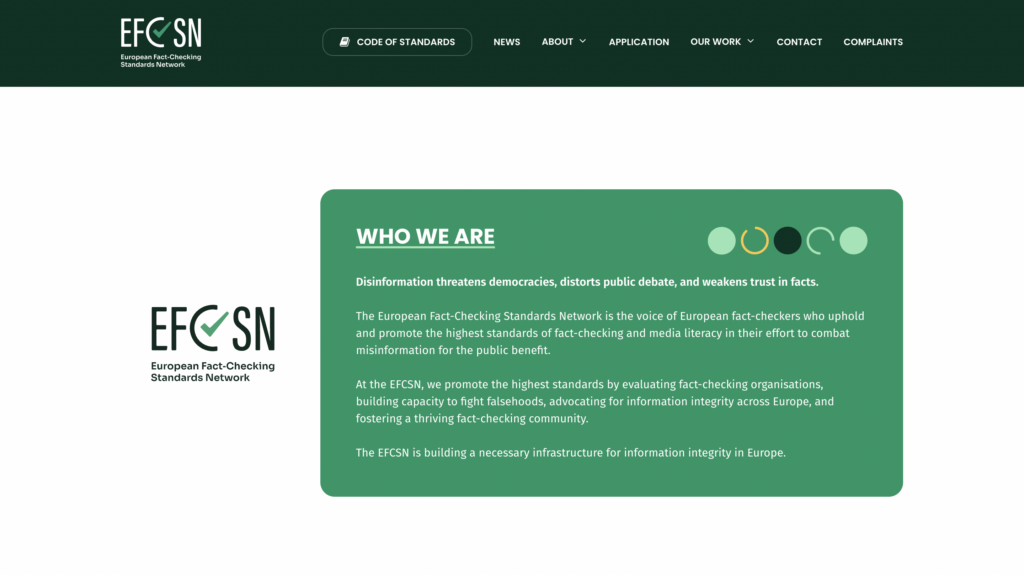
EFCSN is the network coalition of over 60 fact-checking organisations working across Europe. As wide-spead fake news and disinformation threatens democracies, distorts public debate and weakens trust in facts, the aim of EFCN is to be the voice of European fact-checkers who follow the highest standard of journalism, fact-checking and media literacy to combat fake news, mis-, dis- and malinformation for the public benefit. The coalition of fact-checkers set rigorous standards, create shared tools, promote collaboration, advocate for information integrity, and fostering a connected, collaborative community to build trust. Member are committed to upholding freedom of expression and promoting the public’s access to fact-checked trustworthy data and information.
The strength of the network lies in their members who are independent, locally rooted fact-checking organisations serving their communities with accurate, nonpartisan information. Membership is based on assessment and verification – see the list of verified members and details of the application. Members commit to transparency, independence, and excellence and strengthen the credibility of fact-checking by ensuring all members comply with the Code of Standards.
The network empowers fact-checkers with shared tools, cross-border coordination, and ethically managed data. The network provides financial support in many different areas of fact-checking from technical help to project-based grants and protection scheme.
Website:
https://efcsn.com/
Contact:
https://efcsn.com/contact/